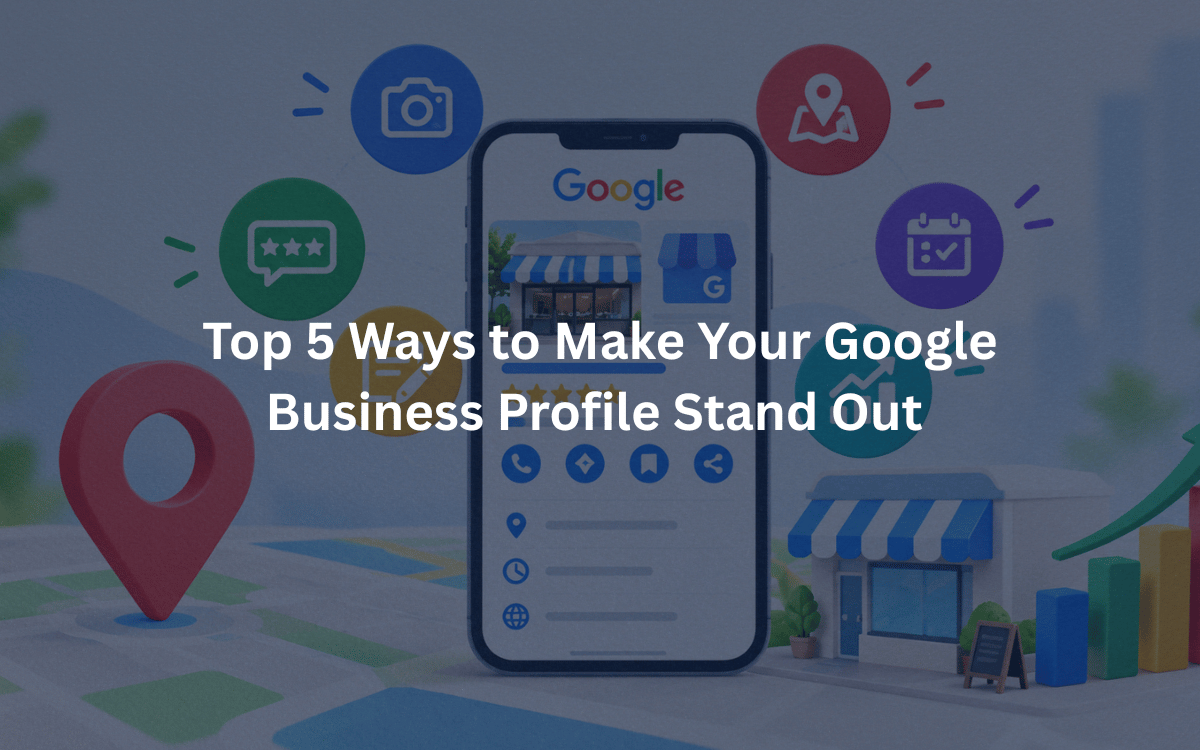
If you run a local business, your Google Business Profile is often the very first impression a potential customer forms about you. Long before someone visits your website or walks through your door, they see your profile pop up on a Google search or on Maps. They glance at your photos, scan your reviews, check your hours, and decide in a matter of seconds whether you’re worth a call or a visit. In a crowded market, a plain, half-filled profile simply gets scrolled past. The businesses that consistently show up at the top of the local pack are the ones that treat their profile like an active marketing channel, not a one-time setup task.
The good news is that standing out doesn’t require a huge budget or a technical team. It requires consistency, a bit of strategy, and an understanding of how Google actually evaluates local listings today. Below are five practical, proven ways to make your Google Business Profile stand head and shoulders above your competitors.
1. Complete Every Single Field, Not Just the Basics
Most business owners fill in their name, address, phone number, and website, and then stop. That’s the bare minimum, and it won’t help you rank. Google rewards profiles that are genuinely complete: business hours (including holiday hours), a detailed and keyword-rich business description, service areas, accessibility features, payment options, and every relevant attribute Google offers for your category. If you run a restaurant, add your menu. If you run a clinic, list your specialities. The more context you give Google, the more confidently it can match your profile to the right searches. Skipping this step is one of the easiest ways to lose visibility to a competitor who simply filled out one more field than you did.
This same principle of building a complete, structured foundation is exactly what students learn in a good digital marketing course in Ahmedabad, where local SEO and profile optimisation are taught as a core, practical skill rather than a theoretical add-on. Understanding why each field matters, and not just how to fill it in, is what separates a profile that ranks from one that quietly disappears.
2. Use High-Quality Photos and Videos Regularly
Visuals do more work than most business owners realise. Profiles with professional, well-lit photos consistently receive significantly more clicks and direction requests than profiles with blurry or outdated images. But it’s not a one-time upload Google notices activity. Add fresh photos of your storefront, products, team, and completed work every few weeks. Short videos and virtual tours add another layer of trust, letting customers picture themselves walking into your space before they ever arrive. If you’re a service-based business without a physical storefront, photos of your team at work or before-and-after shots of completed projects work just as well.
Choosing the right imagery, cropping for the map pack, and understanding what visual content actually converts is a skill in itself. This is one of the practical areas covered in SEO classes in Ahmedabad, where learners get hands-on experience optimising real business profiles rather than just reading about best practices.
3. Post Consistently and Treat Posts Like Mini-Ads
Google Business Profile Posts are one of the most underused features on the platform, and that’s exactly why using them well gives you an edge. Posts let you share updates, offers, events, and announcements directly on your listing, where they appear in both Search and Maps. They don’t move your ranking position directly, but they significantly lift click-through rates and give searchers a reason to choose you over a competitor sitting right next to you in the results. Aim to post at least once or twice a week, with a clear headline, a strong image, and a direct call-to-action like “Call Now” or “Book Online.” Since most posts expire within seven days, consistency matters far more than a single well-crafted post.
Treating these posts strategically, timing them around promotions, and tying them into a broader content calendar is really a small business development exercise. It’s the same thinking taught in courses for business development, where the focus is on turning everyday marketing touchpoints into measurable growth opportunities rather than isolated tasks.
4. Manage Reviews Actively, Not Passively
Reviews remain one of the strongest trust signals on your entire profile, but it’s not just about the star rating anymore. A steady, ongoing flow of fresh reviews performs better than a sudden burst followed by silence, so make review requests part of your regular customer follow-up process rather than an occasional afterthought. Just as important is how you respond. Replying to every review, positive or negative, within 24 hours shows both customers and Google that you’re an active, engaged business. Thank customers by name, reference specific details from their experience, and avoid generic, copy-pasted responses. When a negative review comes in, respond calmly and professionally, and try to move the resolution offline if needed. Prospective customers read these responses closely, often more closely than the reviews themselves, to judge how you handle problems.
5. Choose the Right Category and Keep Information Consistent Everywhere
Your primary business category is arguably the single most powerful lever you can pull for local ranking. Many businesses default to a broad, generic category when a narrower, more specific one would match searcher intent far more precisely. Take time to research exactly what category your top-ranking competitors use, and choose the most accurate option available rather than the most obvious one. Alongside this, make sure your business name, address, and phone number are identical across your website, social media, and every directory you appear on. Inconsistent information confuses Google and erodes the trust signals your profile has built up, sometimes without you even realising why your rankings dipped.
Bringing It All Together
None of these five strategies work in isolation, and none of them require a one-time fix. A Google Business Profile that stands out is one that’s treated as a living part of your marketing, updated with fresh photos, active posts, prompt review responses, and accurate information week after week. Small, consistent effort compounds over time, and it’s often the deciding factor between a business that dominates the local map pack and one that gets lost in the scroll.
If you want to build these skills properly, structured learning helps far more than trial and error. Whether it’s mastering local SEO, understanding how Google’s algorithm actually evaluates listings, or learning how to turn profile management into a genuine growth strategy for your business, investing time in the right training pays off well beyond your Google Business Profile alone.