Most brands don’t have content problems. They have a direction problem. They publish blog posts, post on social media, send newsletters, and record the occasional video, yet the numbers barely move. Traffic comes in, but nobody stays. A few people subscribe, but almost nobody buys.
The fix is rarely “post more.” It is a framework: a clear, repeatable system that connects every piece of content to a real person and a real business goal. This guide walks through one that works for startups, agencies, and established companies alike.
Step 1: Know Who You’re Talking To
Every strong content strategy starts with a specific audience. “Small business owners” is not an audience. “Founders of five-to-twenty-person service companies who are struggling to generate steady leads” is.
Spend a week collecting real information. Read customer emails, go through sales call notes, scan comments on your posts, and look at the questions people ask in online communities. Pay attention to the exact words they use, because those words should show up in your headlines and opening lines.
Then write a short profile for your ideal reader covering their daily frustrations, what they’ve already tried, what they’re afraid of, and what a win looks like for them. Keep it to one page. If it takes longer to read than a coffee takes to cool, nobody on your team will use it.
Step 2: Set Goals You Can Measure
“Brand awareness” is a fine aim, but it’s a terrible goal because you can’t tell when you’ve hit it. Tie your content to numbers that connect to revenue.
Choose one primary goal per quarter. It could be growing your email list by 1,500 subscribers, generating 60 qualified demo requests, or lifting organic traffic to your service pages by 40 percent. Then pick two or three supporting metrics, such as average time on page, click-through rate from email, or the share of readers who reach a call to action.
When your goal is specific, deciding what to create becomes much easier. You stop asking “What should we post today?” and start asking, “Which piece moves us closer to this number?”
Step 3: Build Your Content Pillars
Content pillars are the three to five core themes your brand will talk about consistently. They keep you focused and help readers learn what you’re known for.
A good pillar sits where three things overlap: what your audience cares about, what you know better than most, and what connects naturally to your product or service. If you run a bookkeeping firm, your pillars might be cash flow management, tax planning for small businesses, financial tools, and growth planning.
Each pillar then branches into dozens of topics. One pillar can feed a flagship guide, ten short posts, a webinar, a checklist, and a month of social snippets. That is how a small team looks like a big one.
Step 4: Map Content to the Buyer’s Journey
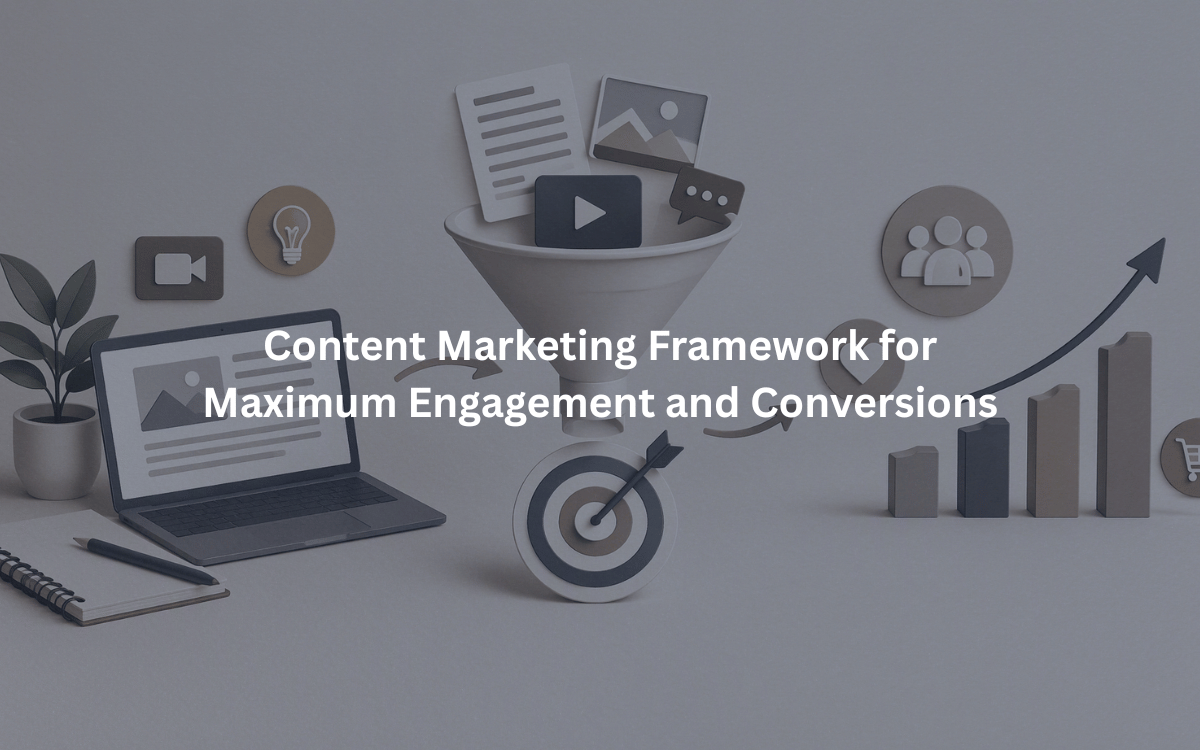
This is where most strategies quietly fall apart. Teams create plenty of top-of-funnel content and then wonder why nobody converts. People don’t buy after one blog post. They move through stages, and each stage needs a different kind of content.
Awareness. The reader has a problem but may not have a name for it yet. Educational articles, short videos, and simple how-to guides work well here. The tone should be helpful, not salesy.
Consideration. The reader knows the problem and compares approaches. Comparison posts, case studies, templates, and deeper guides earn trust at this stage.
Decision. The reader is close to choosing. Give them proof: testimonials, results, pricing explanations, free consultations, and honest answers to common objections.
A healthy content library covers all three. A quick audit helps list your existing content and tag each piece by stage. The gaps will be obvious, and they’re usually in the middle and bottom of the funnel.
Step 5: Create With a Repeatable Process
Great content rarely comes from a burst of inspiration. It comes from a process that makes quality repeatable. Here’s one that works well.
Start with research. Look at what already ranks for your topic, then decide what you can add that others haven’t: original data, a sharper example, a more practical template, or a stronger point of view.
Next, outline before you write. Decide the one idea the reader should take away and build everything around it. Open with a hook that names the reader’s problem, deliver value early, and don’t make people hunt for the answer.
Write like your talk. Short sentences, concrete examples, and plain words beat jargon every time. Read your draft aloud, and if you stumble, rewrite the sentence. Finally, edit hard. Cut the throat-clearing, remove filler, and make sure every paragraph earns its place.
Step 6: Format for How People Actually Read
Most readers skim first and second. Make that easy. Use clear subheadings, short paragraphs, and bold key ideas. Add visuals where they genuinely help, such as a simple chart, a screenshot, or a before-and-after example. Put your most important point near the top, not at the end.
Think about mobile, too. A paragraph that looks tidy on a laptop can feel like a wall of text on a phone. Keep paragraphs to three or four lines and test every post on your own device before it goes live.
Step 7: Distribute Like It Matters as Much as Creating
Publishing is not promotion. A great article with no distribution is a tree falling in an empty forest.
Plan distribution before you write. For each piece, decide where it will live and how it will travel. Share it with your email list, break it into several social posts, and turn the main idea into a short video or carousel. Send it to a few relevant people who might find it useful, and link it to it from your older, high-traffic posts.
Refresh your best performers every few months, too. Updating a post that already ranks is often faster and more profitable than writing a new one from scratch.
Step 8: Design for Engagement
Engagement isn’t luck. It comes from small choices repeated consistently.
Ask real questions at the end of posts and answer every reply. Include stories, because people remember narratives far longer than statistics. Be specific: “We cut our client onboarding time from nine days to three” lands harder than “We improved efficiency.”
Invite participation through polls, surveys, and short quizzes. Feature your customers’ stories and wins. When people see themselves in your content, they stay, share, and come back.
Consistency matters just as much as creativity. A weekly newsletter that arrives reliably builds more trust than a brilliant post every three months. Choose a rhythm you can sustain, whether that’s two posts a week or one, and protect it.
Step 9: Turn Attention into Action
Engagement without conversion is just applause. Every piece of content should have a clear next step, and that step should match the reader’s stage.
For awareness content, the next step might be a newsletter signup or a related guide. For consideration content, offer a template, a webinar, or a free tool in exchange for an email address. For decision content, make booking a call or requesting a quote effortless.
A few conversion principles are worth keeping in mind. Use one primary call to action per page rather than five competing ones. Write a text button that describes the benefit, such as “Get the free checklist” instead of “Submit.” Remove friction from forms by asking only for what you truly need. And place calls to action where interest peaks, usually after you’ve delivered a useful insight, not before.
Lead magnets deserve special attention. The best ones solve one narrow problem quickly: a swipe file, a calculator, a ten-minute audit, or a ready-to-use template. Then follow up with a short email sequence that continues the conversation instead of pitching immediately.
Growing a business through content also takes real commercial skills: understanding pipelines, partnerships, pricing, and negotiation. Professionals who pair marketing know-how with a business development certification often find it easier to connect content efforts to actual revenue conversations, because they understand how leads become deals, not just how they become clicks.
Step 10: Measure, Learn, and Improve
Your framework is only as good as your feedback loop. Set a monthly review and look at a few questions. Which pieces drove the most conversions, not just the most traffic? Where do readers drop off? Which channels bring the most engaged visitors? Which topics get saved and shared?
Look for patterns rather than isolated wins. If case studies consistently outperform opinion pieces, make more case studies. If your Tuesday emails get higher opens than Friday ones, move your best content to Tuesday.
Run small experiments too. Test two headlines, two calls to action, or two email subject lines, changing only one thing at a time. Over a year, small improvements compound into a significant advantage.
Keep a simple dashboard with five or six numbers rather than twenty. Too much data creates paralysis, while a handful of meaningful metrics creates action.
Keep Learning as Landscape Changes
Search algorithms, social platforms, and audience habits keep shifting. The marketers who thrive are the ones who keep learning. Whether you pick things up through experimentation, mentors, or structured training, building your skills pays off. For people in Gujarat, enrolling in digital marketing classes in Ahmedabad can be a practical way to learn SEO, social media, analytics, and content strategy with hands-on projects and local networking, which helps turn theory into results faster.
Whatever route you choose, treat learning as part of the framework, not a separate activity. Every campaign you run is also a lesson, so write down what worked, what flopped, and what you’d do differently.
A Simple 30-Day Plan to Get Started
If this feels like a lot, start small.
In week one, define your audience and set one clear goal. In week two, choose your content pillars and audit your existing content by funnel stage. In week three, create your first piece using the process above, along with a distribution plan and a single, clear call to action. In week four, publish, promote, and review the early results.
Then repeat, improving each cycle. Within a quarter, you’ll have a content engine that runs on purpose rather than guesswork.
Final Thoughts
Content marketing works when it’s built on clarity: a defined audience, a measurable goal, focused pillars, content mapped to the buyer’s journey, thoughtful distribution, and a steady habit of measuring and improving. None of them requires a huge budget or a large team. It requires focus and patience.
Start with one reader, one problem, and one useful piece of content. Do it well, learn from it, and build from there. The brands that win overtime aren’t the loudest. They’re the ones that consistently show up with something genuinely worth reading.