Internet marketing has become such a normal part of daily business operations that it’s easy to forget how complex it actually is underneath the surface. What looks like a simple ad on a social media feed or a well-ranked search result is usually the product of careful strategy, testing, and ongoing optimization. For business owners, marketers, and curious beginners alike, understanding how internet marketing actually works can make the difference between wasted ad spend and a strategy that consistently brings in customers. This guide walks through the core pieces that make internet marketing function, from the first moment a potential customer encounters a brand online to the final purchase decision.
The Foundation: Understanding Your Audience
Before any campaign, ad, or piece of content gets created, effective internet marketing starts with a clear understanding of the target audience. This means knowing not just basic demographics like age or location, but deeper behavioral details: what problems this audience is trying to solve, where they spend time online, and what kind of messaging actually resonates with them. Skipping this step is one of the most common reasons internet marketing campaigns fail, since even the most creative ad will underperform if it’s shown to the wrong people. Every other piece of a marketing strategy, from content to ad targeting, depends on getting this foundational understanding right.
Search Engine Optimization: Getting Found Organically
One of the most powerful, long-term components of internet marketing is search engine optimization, commonly known as SEO. Unlike paid advertising, which stops generating traffic the moment the budget runs out, SEO builds visibility that continues working over time by helping a website rank higher in organic search results. This involves optimizing website content around relevant keywords, improving site speed and mobile usability, and earning credible backlinks from other reputable sites. For those wanting a structured way to actually learn these techniques rather than piecing information together from scattered blog posts, enrolling in an SEO course in Ahmedabad offers hands-on training that covers both the technical and strategic sides of ranking well in search results.
Paid Advertising: Buying Visibility Instantly
While SEO builds visibility gradually, paid advertising offers something SEO can’t: instant reach. Platforms like Google Ads, Meta Ads, and TikTok Ads allow businesses to target incredibly specific audiences based on interests, behavior, location, and even past interactions with a brand. The advantage of paid advertising is speed and control, since campaigns can be adjusted, paused, or scaled almost immediately based on performance data. The tradeoff is cost; unlike organic strategies, paid visibility disappears the moment spending stops, which is why most effective internet marketing strategies combine paid and organic efforts rather than relying on just one.
Content Marketing: Building Trust Over Time
Internet marketing isn’t only about getting clicks; it’s also about building trust with an audience before they’re ready to buy. Content marketing, through blog posts, videos, podcasts, or social media content, helps establish a brand as knowledgeable and credible in its space. This approach plays the long game, nurturing potential customers through education and value rather than direct sales pitches. Businesses that consistently produce helpful, relevant content tend to build stronger, more loyal audiences over time, since trust built through genuinely useful information is far harder for competitors to replicate than a one-time discount or promotion.
Email Marketing: Still One of the Highest-Performing Channels
Despite being one of the older forms of internet marketing, email remains remarkably effective, largely because it reaches people directly rather than depending on an algorithm to decide who sees a message. A well-built email list allows businesses to nurture leads, announce promotions, and maintain relationships with existing customers at a fraction of the cost of paid advertising. The key to effective email marketing lies in segmentation and personalization, sending relevant messages to the right subscribers rather than blasting the same generic message to an entire list, which tends to drive unsubscribes rather than conversions.
Analytics: Measuring What Actually Works
None of these strategies mean much without proper measurement. Internet marketing generates an enormous amount of data, and knowing how to interpret it separates effective marketers from those simply guessing. Metrics like click-through rate, conversion rate, cost per acquisition, and customer lifetime value all tell different parts of the story about what’s actually working. Businesses that regularly review this data and adjust their strategy accordingly tend to see steadily improving results, while those that set a campaign and forget about it often waste significant budget on tactics that stopped working months ago.
Learning the Business Side of Marketing
Understanding internet marketing tools and tactics is valuable, but connecting that knowledge to actual business growth is what turns marketing into a real driver of revenue. This is why many professionals pursue a certificate in business development alongside their marketing education, gaining a clearer understanding of how customer acquisition, pricing strategy, and retention all tie together. Marketing skills without business context can lead to campaigns that generate clicks without generating meaningful revenue, which is ultimately what most businesses actually care about.
Structured Learning for Long-Term Success
Given how many moving parts are involved in internet marketing, self-teaching through scattered online resources can only go so far. Many beginners and professionals alike find that structured education accelerates their learning significantly. Enrolling in a well-regarded digital marketing institute in Ahmedabad offers a comprehensive path through all of these components, SEO, paid advertising, content strategy, and analytics, taught in a logical sequence with practical application rather than fragmented information gathered from random sources online.
Bringing It All Together
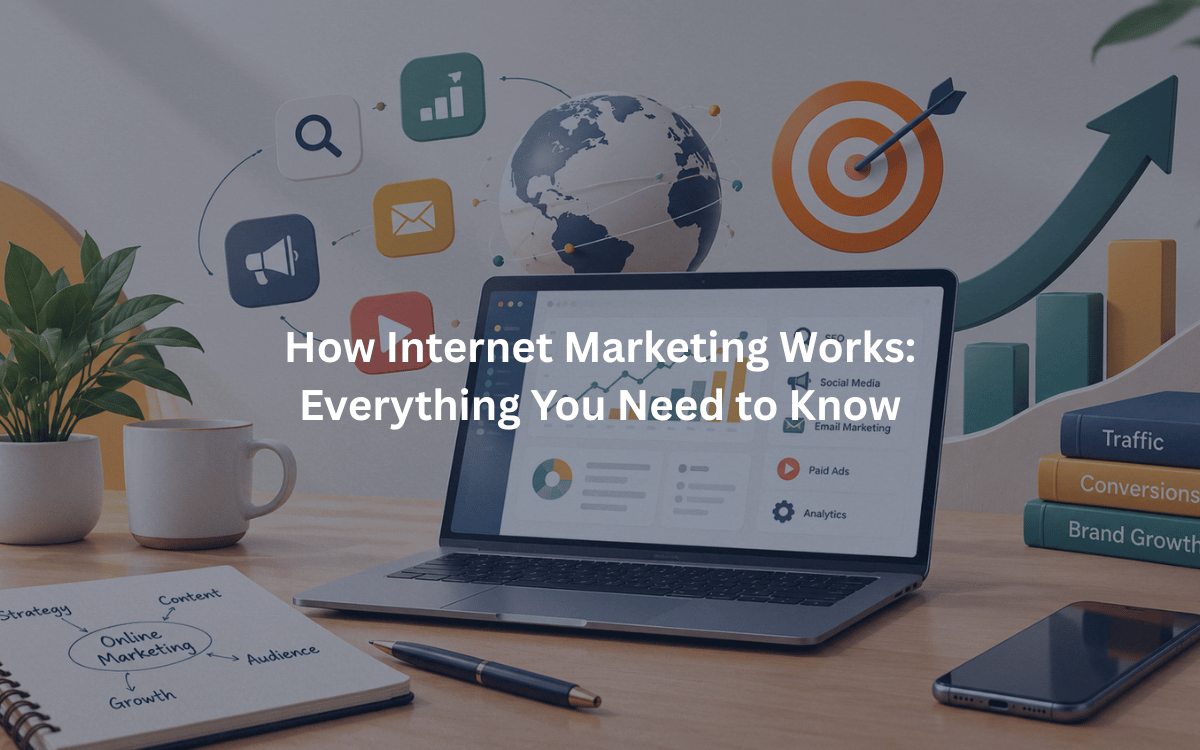
Internet marketing isn’t a single tactic; it’s an interconnected system where SEO, paid ads, content, email, and analytics all work together to attract, convert, and retain customers. Businesses that understand how these pieces fit together, rather than treating them as isolated efforts, tend to build stronger, more sustainable growth over time. Whether you’re a business owner trying to understand where to invest your marketing budget or an individual looking to build a career in the field, understanding how internet marketing actually works from the ground up is the first step toward using it effectively.